
CPOS Seminar: "Investigating the “Active Site” in Inverse Oxide-on-Metal Catalysts for Selective C-O Activation"
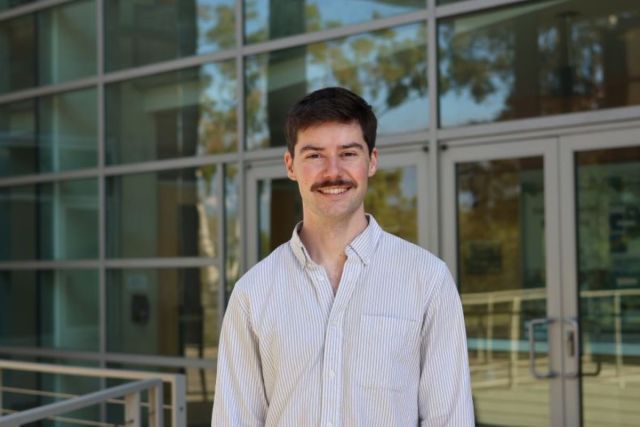
Speaker: Justin Marlowe, Postdoctoral Researcher, McFarland Group, Department of Chemical Engineering, UC Santa Barbara
The development of structure-activity relationships in heterogeneous catalysis is a fundamental aspect of catalyst development and discovery. Recently, there has been growing interest in a class of catalysts exhibiting an inversion of traditional architectures, wherein reduced metal oxides (WOx, MoOx, TiOx, etc.) on top of metal nanoparticles (Pt, Ru, Ni, etc.) have been shown to be active and highly selective for C-O bond activation in the context of biomass valorization through hydrodeoxygenation (HDO). However, due to the structural complexity of these multi-component catalyst formulations, there remains much work to be done to identify and characterize the specific motifs, or “active sites”, which are responsible for C-O bond activation.
In this talk, I will discuss prior and on-going work related to identifying the active structure responsible for C-O activation in MOx-modified Pt/SiO2 catalysts in the HDO of phenolic compounds representative of lignin-derived monomers. Using this tunable and well-controlled catalyst platform, it is possible to first identify the inherent structure-sensitivity of Pt nanoparticles for C-O activation, highlighting that the same Pt sites responsible for C-O activation, the desired reaction, are also responsible for undesired aromatic ring hydrogenation. However, by functionalizing Pt nanoparticle surfaces with MOx domains, it is possible to break this relationship by sterically hindering the specific adsorption modes of phenolic species on Pt surfaces typically preceding ring hydrogenation. However, the role of MOx species is not limited to this steric effect – by varying the modifying MOx species, we show that the oxide-metal interface promotes C-O activation compared to bare Pt nanoparticle surfaces, highlighting that MOx species also directly promote reactivity, possibly through Lewis acid/base interactions between oxygen vacancies in MOx domains and adsorbed oxygen-containing functionalities. While these results underscore the utility of well-defined systems for simplifying complex catalyst compositions, further quantitative insight into the reactivity of oxide-metal interfaces, broadly, is limited by current characterization methods and opens the need for continued investigation.
